Key Takeaways
- Calculate your daily idli production needs before selecting an Idly Making Machine for optimal efficiency.
- Tray configuration is crucial; ensure it aligns with your batch production requirements and kitchen space.
- Look for machines that provide consistent steam distribution for even idli preparation across batches.
- Consider how the Idly Making Machine integrates into your existing kitchen workflow for seamless operations.
- Evaluate the ease of operation and maintenance to ensure lasting functionality in high-volume settings.
Jackson Machine a leading manufacturer of Idly Making Machine solutions for commercial kitchens, restaurants, catering businesses, and food-processing operations.
When daily idli demand grows, traditional steaming methods can become difficult to manage across repeated batches. Businesses need equipment that fits their production volume, available kitchen space, workflow, and requirement for consistent steaming. Selecting the right machine therefore starts with understanding how idlis will actually be produced during daily commercial operations.
At Jackson Machine, we help businesses evaluate these practical requirements before choosing equipment for bulk idli preparation.
Start With Your Actual Idli Production Requirement
A high-volume business should first calculate how many idlis it needs during normal operating hours and peak service periods. Production requirements can vary significantly between a restaurant serving breakfast and a caterer preparing large event orders.
Before selecting equipment, review:
- Your average number of idlis required per batch.
- How many batches you expect to prepare daily.
- Your busiest production period.
- Available preparation and steaming time.
- Whether production demand is expected to increase.
Machine selection should follow your real production pattern rather than simply choosing the largest available setup.
A restaurant, commercial kitchen, catering operation, or food-processing unit can use this information to identify whether its existing steaming process can support future demand.
Look Closely at Tray Configuration
Tray configuration matters because commercial idli production depends heavily on how efficiently batches can be organized and steamed.
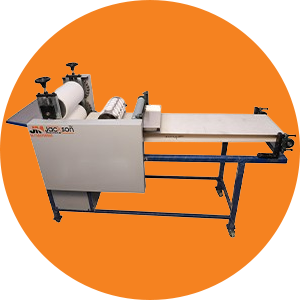
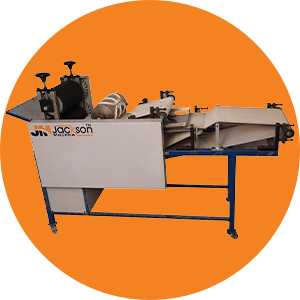
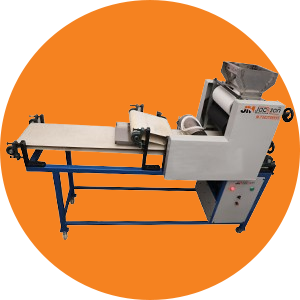
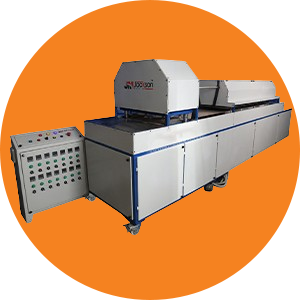
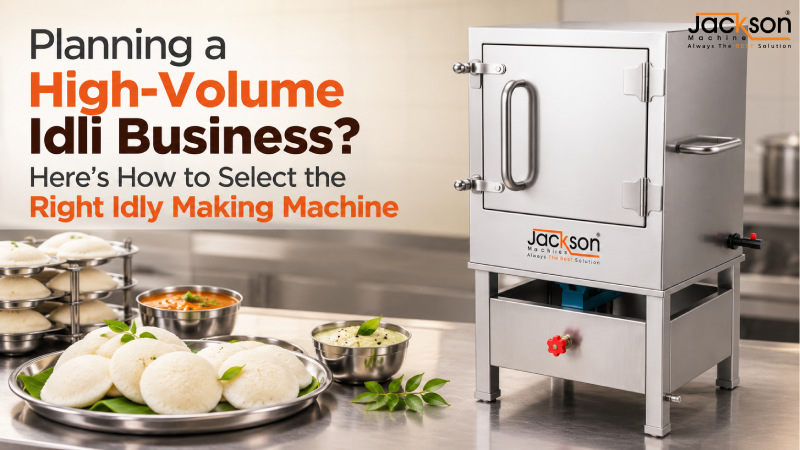
The Idli Machine listed by Jackson Machine is specified as a 12-tray model, with a published tray size of 14 x 18 x 1.25 inches. Its listed overall dimensions are 23 x 24 x 52 inches, with a machine weight of 58 kg.
For a business evaluating an Idly Making Machine, these dimensions are useful when planning both batch handling and installation space.
The number of idlis produced in an individual cycle will also depend on the tray arrangement being used. Buyers should therefore discuss their desired batch requirements before finalizing a commercial setup.
Consider Steam Distribution and Batch Consistency
In commercial idli preparation, producing a large batch is only useful when steaming remains consistent across the loaded trays.
The machine uses steam-cooking technology designed to cook idli batter evenly and support consistent batch preparation. The manufacturer describes the equipment as suitable for producing soft, evenly cooked idlis while reducing the dependence on traditional manual steaming methods.
Consistent steaming is particularly important when multiple batches need to maintain a similar texture and preparation standard.
For restaurants and catering businesses, this can make production planning more predictable during busy service periods.
Check Whether the Machine Fits Your Kitchen
Production capacity should never be considered separately from available workspace.
Before installing an Idly Making Machine, review the area around the proposed location and consider how staff will load trays, remove finished batches, clean the machine, and move between preparation areas.
Use this practical checklist before finalizing your setup:
- Check the available floor space against the machine dimensions
- Leave practical working space for loading and unloading trays
- Plan where prepared batter will be positioned before steaming
- Keep finished-product handling convenient
- Consider daily cleaning and maintenance access
- Review utility requirements before installation
A machine may be suitable from a production perspective but still create operational problems if the surrounding workflow is poorly planned.
Match the Equipment With Your Business Type
Different food businesses have different reasons for increasing idli production.
A restaurant may need repeated breakfast batches. A catering company may need larger quantities within a limited preparation window. A food-processing unit may focus on standardized batch production, while a commercial kitchen may produce idlis alongside several other menu items.
The machine is positioned for commercial kitchens, restaurants, catering services, and food-processing units.
Consider how these common operating needs differ:
Business Type | Main Selection Priority |
Restaurant | Reliable repeated batch production |
Catering Service | Handling bulk preparation efficiently |
Commercial Kitchen | Practical workflow and space utilization |
Food-Processing Unit | Consistent batch operation |
Growing Food Business | Capacity that supports future demand |
Your machine choice should reflect how the equipment will be used every day, not simply the category of business you operate.
Evaluate Ease of Operation and Maintenance
High-volume production equipment should fit naturally into the working routine of kitchen staff.
The idli machine is described with user-friendly controls and a robust construction intended for commercial use. The listing also highlights straightforward cleaning and maintenance for regular operation.
When evaluating equipment, buyers should think about who will operate it, how frequently batches will be loaded, and how cleaning will be handled between or after production cycles.
Simple daily operation becomes increasingly important as production frequency rises.
Plan the Complete Production Flow
“Purchasing Idly Making Machine” is just one element of the efficient high-volume idli-making process.
Your workflow needs to include the batter preparation process, batter storage, tray filling, cooking, loading, serving/packing, and clean up process. The sequence must be logical so that people are not constantly carrying the materials back and forth in the kitchen.
In the case of large-scale operations, even small workflow changes can make repetitive production more manageable.
Before installing the machine, you should visualize the entire process from batter preparation to finished idlis. This will help you determine if you need to change any other aspect of your flow process.
Why Choose Us
Jackson Machine concentrates on producing commercial grade idli machines based on real-life production needs. For those thinking about setting up a large-scale idli business, our people will consider elements like kitchen area, batch size, arrangement of trays, working process, and end-use purposes before making any decisions regarding the purchase of equipment. The idli machine provided in our list is produced especially for commercial kitchens, restaurants, catering services, and food-processing establishments that need to use batch idli production in steam ovens.
Conclusion
Selecting the proper Idly Making Machine cannot be done simply by evaluating the equipment’s size. The organization needs to assess its batch requirements, tray design, steaming quality, kitchen space availability, cleaning needs, and the entire production process flow where the machine will fit into. The properly set up facility would make it possible to manage repeat batches in the commercial setting without disrupting the organized kitchen operations. Our company Jackson Machine is here to assist our B2B customers in assessing the appropriate idli making facility for their intended application.
Planning to increase idli production for your restaurant, catering business, commercial kitchen, or food-processing operation? Speak with our team about your expected batch requirement, available workspace, and daily production needs. We can help you evaluate a suitable commercial idli machine setup.
Call: +91 63523 14282
Email: navneet@jacksonmachine.in
Frequently Asked Questions
What factors should I consider when selecting an Idly Making Machine?
When selecting an Idly Making Machine, consider your actual idli production requirements, tray configuration, steam distribution consistency, available kitchen space, and ease of operation and maintenance. Each of these factors will significantly impact your kitchen’s efficiency and output.
How can I determine my idli production requirements?
To determine your idli production requirements, calculate the average number of idlis needed per batch, consider the number of batches expected daily, and identify your busiest production times. This will help you select a machine that can meet your needs effectively.
Why is tray configuration important in an Idly Making Machine?
Tray configuration is crucial because it affects how efficiently your batches can be organized and steamed. The arrangement of trays directly impacts the number of idlis produced in each cycle, so it’s essential to discuss your batch needs before finalizing your machine choice.
How do I ensure the chosen Idly Making Machine fits my kitchen space?
To ensure the Idly Making Machine fits your kitchen, check the available floor space against the machine’s dimensions. It’s essential to leave enough working area for staff to load and unload trays and perform cleaning without disruptions.
What maintenance should I expect with an Idly Making Machine?
Most Idly Making Machines are designed for straightforward cleaning and regular maintenance. Consider who will be operating the machine and how often it will be used to ensure that the maintenance requirements align well with your kitchen’s workflow.