
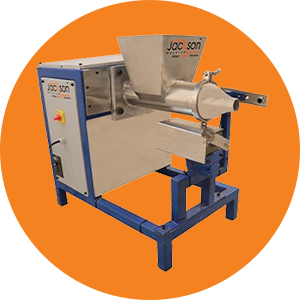
Product & Technology
How the machines work and which one fits your product.
What is a chapati making machine?
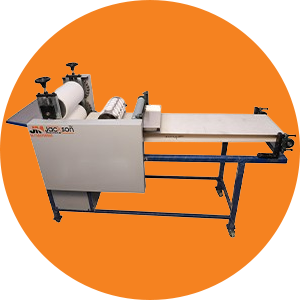
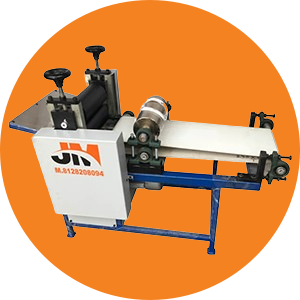
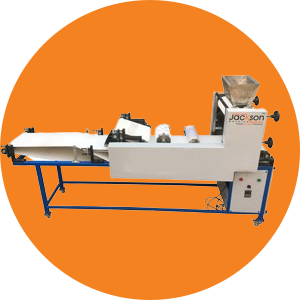
A chapati making machine is commercial equipment that automates dough mixing, portioning, pressing, and cooking to produce chapatis or rotis without manual rolling. Models range from semi-automatic tabletop units for small kitchens to fully automatic lines producing 1,000+ pieces per hour for hotels, hostels, and food processing plants.
How does a khakhra making machine work?
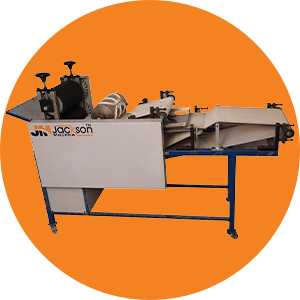
A khakhra making machine presses thin dough discs to uniform thickness, then roasts them on a heated plate or conveyor until crisp. Automatic models control temperature and rotation for even roasting, removing the manual pressing and flipping traditionally needed to produce khakhra at commercial volume.
Which machine is used to make papad?
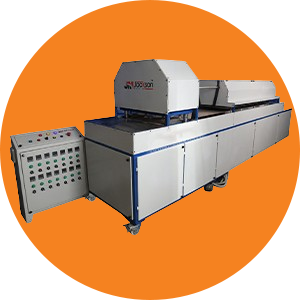
Papad production typically uses a dough kneader/extruder to form uniform sheets or discs, followed by a papad dryer to remove moisture. Fully automatic papad-machine-with-dryer models combine both steps into a single production line for consistent thickness and shelf life.
Which machine is best for panipuri production?
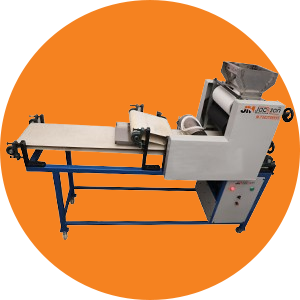
Panipuri production machines range from compact puri-pressing units for small stalls to fully automatic panipuri-making lines with integrated frying for high-volume commercial output. The right choice depends on daily volume needed and whether you need a fixed installation or a mobile unit.
Pricing & Starting a Business
Costs, payback and what you need to launch production.
How much does a chapati machine cost?
Chapati machine pricing varies by automation level and capacity: manual and semi-automatic pressing units are the most affordable entry point, while fully automatic machines producing 1,000+ rotis/hour cost significantly more. Get a model-specific quote, since price also depends on motor size and build material.
Which food processing machine is best for startups?
Startups and small food businesses generally start with semi-automatic machines — lower upfront cost, smaller footprint, and capacity matched to early-stage demand — then upgrade to fully automatic lines once volume justifies the higher throughput and lower per-unit labour cost.
How do I start a papad manufacturing business?
Starting a papad manufacturing business generally requires an FSSAI food business license, a papad-making machine sized to your target volume, a drying setup, and a packaging line. Many entrepreneurs start with semi-automatic equipment and scale to fully automatic drying-integrated machines as order volume grows.
What equipment is required for a commercial kitchen?
A commercial kitchen typically needs dough preparation equipment (kneaders, sheeters), cooking equipment (fryers, kadhais, roti/chapati machines), prep tools (vegetable cutters, mixers), and packaging/sealing machines. The right combination depends on menu volume and whether the kitchen is a restaurant, cloud kitchen, or catering unit.