
Key Takeaways
- Identify production bottlenecks to optimize Farsi Puri output effectively.
- A Farsi Puri Making Machine can help standardize thickness and size for consistent quality.
- Calculate current and peak production needs before investing in machinery.
- Utilize features like speed control to align production with downstream processing capabilities.
- Plan your production area for efficient workflow and maintenance access.
When Farsi Puri orders increase, adding more people to rolling and cutting may increase output temporarily, but it also makes production more dependent on labour availability. For a growing snack business, the better question is where the actual production bottleneck lies. If flattening and cutting are restricting daily output, mechanizing those stages can create a more scalable production process.
Identify Where Manual Production Is Slowing You Down
Break the process into individual stages before purchasing equipment. Look at dough preparation, flattening, cutting, collection and the next processing stage. Find the point where products begin waiting.
Mechanization becomes worth considering when:
- Rolling requires several workers every shift
- Puri thickness varies noticeably between operators
- Cutting speed cannot keep up with orders
- Bulk orders require longer production hours
- Increasing output would require hiring more workers
- Your existing line has room for higher downstream production
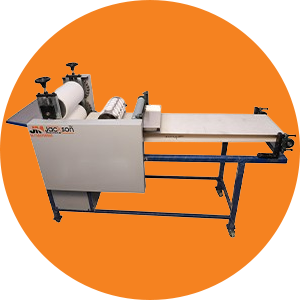
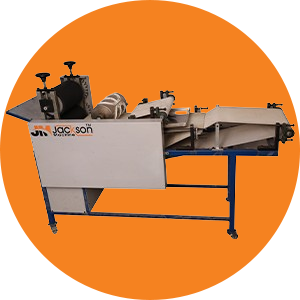
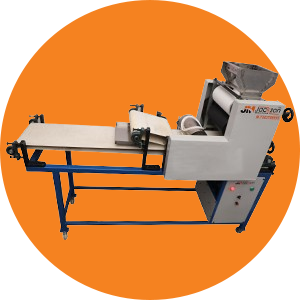
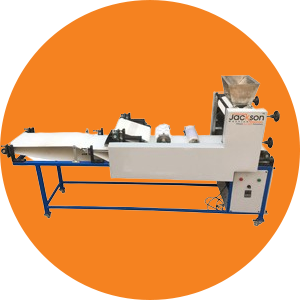
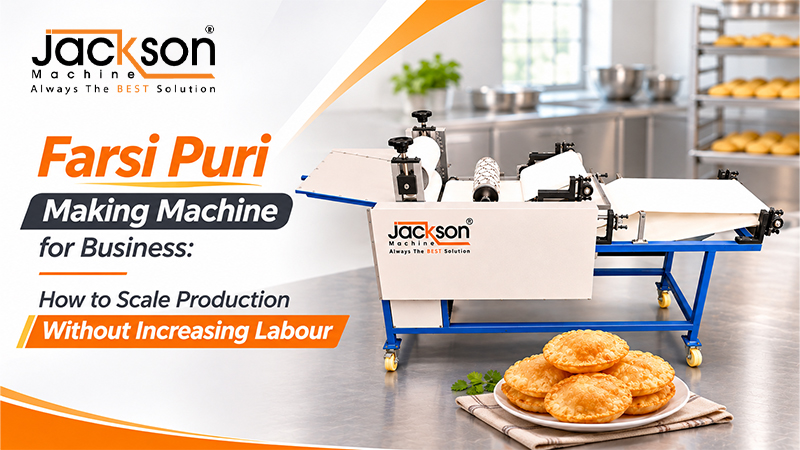
If flattening and cutting are the main constraints, a Farsi Puri Making Machine can directly address those stages.
Start With the Required Pieces Per Hour
The JSPM18 model listed by Jackson Machine has a stated production capacity of approximately 1,800 pieces per hour. Do not look at this figure in isolation. Calculate how many pieces your business currently produces during one hour of active production and how many you need during peak periods. If you need 1,000 pieces across an entire working day, a high-output commercial machine may not be necessary. If you regularly handle wholesale orders or large batches, hourly capacity becomes much more important.
Capacity should solve your existing bottleneck while leaving reasonable room for growth.
Standardization Becomes Important as Volume Grows
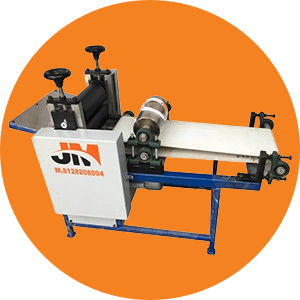
Manual rolling can work well at smaller volumes, but differences between workers become more visible when thousands of pieces are produced. The listed machine is designed to flatten and cut Farsi Puri while supporting uniform production. The product information also states that thickness and diameter can be adjusted according to production requirements. This is useful for businesses that have an established product specification and want repeated batches to follow the same format. A Farsi Puri Making Machine should therefore be evaluated not only by speed but by whether it can produce the size and thickness your customers already expect.
Why Speed Control Matters
The JSPM18 is listed with a 1 HP motor with VFD and includes speed control. Speed control is useful because production is not always about running the machine at the fastest possible setting. Your dough condition, operator workflow and downstream process must be able to keep pace with the machine. If the next stage cannot handle the output, producing pieces faster simply moves the bottleneck further down the line. This is why the complete production process should be evaluated together.
Look at Features That Matter During Daily Production
Some specifications are more useful operationally than they first appear.
The machine listing includes:
- 1 HP motor with VFD
- Speed control
- Extra atta collection
- Three-belt configuration
- Emergency switch
- Approximate production of 1,800 pieces per hour
The machine dimensions are listed at approximately 8.1 × 4.4 × 2.2 feet, with an approximate weight of 185 kg. These numbers matter when planning installation because this is commercial production equipment that requires dedicated floor space.
Plan the Production Area Before Installation
Before installing an Farsi Puri Making Machine, map the complete workflow around it.
- Decide where prepared dough will arrive.
- Keep enough room for the operator to feed and monitor production.
- Plan how finished pieces will be collected.
- Connect the output logically with the next processing stage.
- Leave access around the equipment for cleaning and maintenance.
Do not install the machine wherever empty floor space happens to be available.
The best position is where material movement becomes shorter and easier.
This is particularly important in food-processing plants and larger snack-production facilities where several machines may operate as part of one line.
Who Should Consider This Production Setup?
The listed applications include commercial kitchens, food-processing plants, large-scale production facilities, frozen-food manufacturers and retail or wholesale food suppliers. This makes the machine most relevant for businesses with recurring commercial demand. A small shop producing limited batches manually may not require this level of output. A namkeen manufacturer serving distributors, a frozen-food operation or a supplier managing bulk orders may benefit much more from mechanized production. At Jackson Machine, we recommend matching the equipment to actual order volume rather than automating simply because machinery is available.
Labour Reduction Should Mean Better Labour Allocation
Reducing manual dependency does not mean eliminating people from production. The goal is to reduce repetitive rolling and cutting work so staff can focus on dough preparation, quality checks, handling, packaging, cooking or other stages of production. A well-planned machine installation can allow the same business to handle increasing output without increasing labour at the same rate. That is where automation becomes commercially useful.
Why Choose Us
At Jackson Machine, we work with commercial food businesses that need equipment suited to real production requirements. Before selecting a Farsi Puri setup, buyers should evaluate current pieces per hour, desired size and thickness, available floor space, labour use and the capacity of the next production stage. Our listed JSPM18 combines commercial output with speed control, extra atta collection and an emergency switch. Jackson Machine can help buyers evaluate these factors according to their production environment and growth plans.
Conclusion
A Farsi Puri Making Machine becomes valuable when increasing orders are pushing manual flattening and cutting beyond practical limits. Start by measuring your current hourly production, labour involvement and required product size, then check whether the rest of your line can handle higher output. The JSPM18 is listed at approximately 1,800 pieces per hour, so it should be evaluated as part of a commercial production workflow rather than as a standalone purchase. At Jackson Machine, we can help businesses assess the right setup around their actual production needs.
Planning to increase Farsi Puri production without continuously adding workers to rolling and cutting? Share your current production volume, required puri size and business application with our team. We can help you evaluate the right commercial setup.
Call: +91 63523 14282
Email: navneet@jacksonmachine.in
Frequently Asked Questions
What is a Farsi Puri Making Machine?
A Farsi Puri Making Machine is a specialized piece of equipment designed to streamline the production of Farsi Puri by mechanizing the processes of flattening and cutting. It allows businesses to increase output without relying on manual labor, thereby addressing production bottlenecks.
How much output can a Farsi Puri Making Machine produce?
The JSPM18 model of the Farsi Puri Making Machine can produce approximately 1,800 pieces per hour. This capacity makes it ideal for businesses that handle large-scale orders and need to maintain efficiency in production.
Why should my business invest in a Farsi Puri Making Machine?
Investing in a Farsi Puri Making Machine can significantly enhance production efficiency and consistency by reducing manual labor requirements. This allows staff to focus on other essential tasks while maintaining quality output.
What factors should I consider when choosing a Farsi Puri Making Machine?
When selecting a Farsi Puri Making Machine, consider your current production volume, required size and thickness of the puris, available floor space, and how well the machine integrates into your existing production line.
How does mechanization in Farsi Puri production help reduce labor costs?
Mechanization reduces the dependency on manual labor for repetitive tasks like rolling and cutting, allowing staff to be allocated to more critical stages of production. This can lead to better labor efficiency and potentially lowering overall labor costs for the business.