
Key Takeaways
- Assess your daily chapati cooking requirements to choose the right Chapati Tava for your kitchen's workload.
- Evaluate the available kitchen space to ensure the Chapati Tava fits without hindering movement.
- Prioritize construction and build quality to ensure the tava withstands regular commercial use.
- Consider staff convenience for handling the Chapati Tava during busy periods to enhance kitchen efficiency.
- Think about the type of restaurant service, as different operations have unique chapati preparation needs.
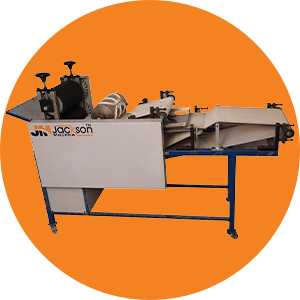
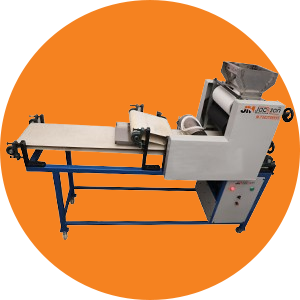
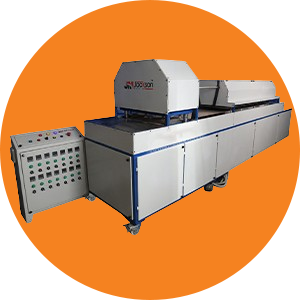
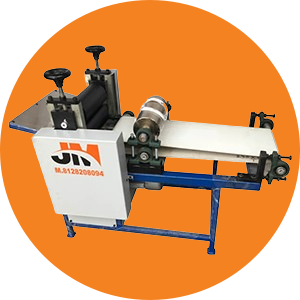
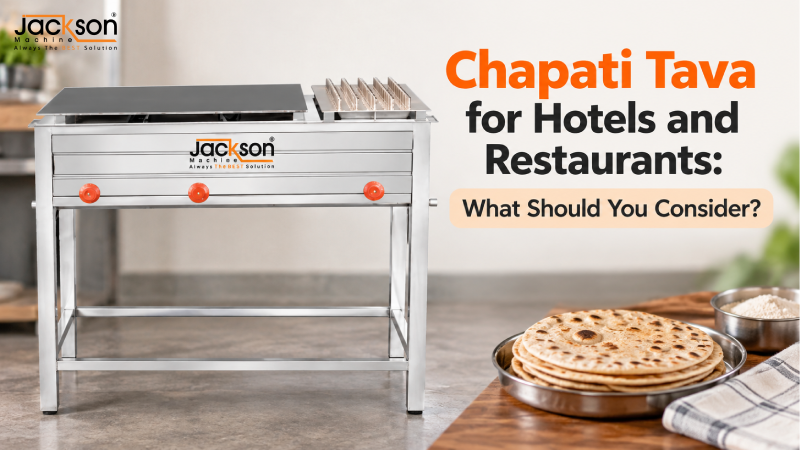
Jackson Machine is a leading manufacturer of Chapati Tava. For hotels and restaurants, selecting the right cooking equipment is important because kitchen operations depend on practical performance, convenient handling, and consistent preparation. A Chapati Tava should fit the kitchen setup, support regular cooking requirements, and be suitable for the type of food service being handled.
Understand Your Daily Chapati Cooking Requirements
The first consideration is the volume of chapatis your kitchen prepares during regular service. A small restaurant with limited orders may have different requirements from a hotel kitchen serving a larger number of customers.
Before selecting equipment, consider your usual cooking workload, available kitchen space, and how frequently the tava will be used. The right equipment should match your actual cooking routine rather than simply being selected by appearance or size.
This approach helps B2B buyers choose equipment that works comfortably within the existing kitchen workflow.
Consider the Kitchen Space Available
Commercial kitchens often have limited working areas, so the available installation space matters. A tava should fit into the planned cooking section without making movement around the workspace difficult.
Check the area where the equipment will be positioned and consider the space required for operators to work comfortably. It is also useful to look at the surrounding arrangement of preparation tables, storage areas, and other cooking equipment.
For hotels and restaurants, space compatibility is an important practical consideration when selecting cooking equipment.
Look at Construction and Build Quality
Commercial kitchen equipment is used regularly, which makes construction quality an important buying factor. Buyers should review the overall build, material quality, finishing, and design of the tava before making a purchase.
The equipment should be appropriate for the intended commercial environment and routine cooking activity. It is also worth checking whether the construction appears practical for everyday handling and cleaning.
A well-considered purchase starts with examining the equipment itself instead of focusing only on its basic function.
Check Cooking Convenience for Kitchen Staff
Hotels and restaurants need equipment that staff can operate comfortably during busy kitchen hours. The cooking setup should support a smooth working process and should not unnecessarily complicate regular food preparation.
Consider how the tava fits into the cooking sequence, how easily staff can access it, and whether its operating arrangement suits the kitchen team.
When comparing options, evaluate these points:
- Ease of handling during regular cooking
- Suitable placement within the kitchen
- Practical working arrangement for operators
- Accessibility during busy service periods
- Compatibility with the existing cooking workflow
These factors can make a significant difference in day-to-day kitchen operations.
Evaluate Cleaning and Maintenance Needs
Cleaning is another important part of commercial kitchen management. A tava should be practical to clean after regular use, particularly in kitchens where cooking takes place throughout the day.
Buyers should consider the surface design, accessibility, and overall construction when evaluating maintenance requirements. Equipment that can be handled and cleaned conveniently can fit more naturally into routine kitchen practices.
Easy maintenance is not a minor detail; it is part of selecting equipment for regular commercial use.
Consider the Type of Restaurant or Hotel Service
Not every food business has the same cooking pattern. A quick-service restaurant may have different needs from a hotel kitchen, catering operation, or larger dining establishment.
Think about the type of menu being served and how chapatis are prepared as part of that menu. The equipment selected should suit the working environment and cooking process of the business.
For this reason, a B2B buyer should evaluate the equipment according to the kitchen’s real operational needs rather than choosing based on general assumptions.
Compare Equipment Features Before Buying
A simple comparison can help buyers narrow down suitable options. Instead of considering one feature in isolation, look at the equipment from several practical angles.
Buying Factor | What to Consider |
Kitchen Space | Available installation and working area |
Construction | Material, finishing, and overall build |
Operation | Practicality for regular kitchen use |
Cleaning | Accessibility and maintenance convenience |
Workflow | Suitability for the kitchen’s cooking process |
Usage | Match with the restaurant or hotel’s chapati requirements |
This comparison gives buyers a clearer view of whether the equipment fits their particular commercial kitchen.
Verify the Equipment Before Placing an Order
Before finalising a purchase, buyers can go through a simple checklist. This helps avoid overlooking practical details that may become important after installation.
- Check the available kitchen space
- Review the equipment’s construction and finish
- Consider the expected cooking workload
- Evaluate operator convenience
- Check cleaning and maintenance practicality
- Confirm that the equipment suits the kitchen workflow
A careful review at the purchasing stage can help businesses make a more suitable equipment selection.
Why Choose Us
Jackson Machine focuses on providing practical machinery solutions for commercial requirements. We understand that hotels and restaurants look for equipment that fits their working environment, cooking process, and operational needs. Our approach is centred on helping buyers select suitable equipment based on their application. For businesses considering a Chapati Tava, we provide a product-focused option for commercial chapati preparation and support buyers in making an informed purchasing decision.
Conclusion
Choosing the right Chapati Tava for a hotel or restaurant requires more than looking at the equipment’s basic purpose. Buyers should consider kitchen space, construction, operator convenience, cleaning requirements, workflow, and the expected level of use. These factors help businesses assess whether a particular tava is suitable for their commercial cooking environment. At Jackson Machine, we focus on practical equipment solutions for businesses that require reliable cooking machinery for their operations. Reviewing your kitchen requirements carefully can help you select equipment that fits your day-to-day needs.
Planning to purchase a commercial chapati cooking solution for your hotel or restaurant? Contact Jackson Machine today to discuss your requirement and get suitable product information.
Phone: +91 63523 14282
Email: navneet@iacksonmachine.in
Frequently Asked Questions
What factors should I consider when selecting a Chapati Tava for my restaurant?
When choosing a Chapati Tava, consider your daily cooking requirements, available kitchen space, build quality, convenience for staff, and cleaning maintenance needs. It’s essential to ensure that the equipment matches your kitchen’s workflow and operational demands.
How much kitchen space do I need for a Chapati Tava?
The kitchen space required for a Chapati Tava depends on its size and the surrounding setup. Ensure there is adequate space for operators to work comfortably without obstructing movement around the kitchen.
Why is the construction quality of a Chapati Tava important?
Construction quality is crucial because commercial kitchen equipment is used regularly and must withstand daily wear. A well-built Chapati Tava supports consistent performance and simplifies maintenance, which is vital for efficient kitchen operations.
What cleaning and maintenance considerations should I keep in mind when choosing a Chapati Tava?
Look for a Chapati Tava that is easy to clean and maintain, considering factors such as surface design, accessibility, and material. Equipment that is straightforward to maintain will fit more naturally into your everyday kitchen routines.
How can I ensure the Chapati Tava fits into my restaurant's cooking workflow?
To ensure the Chapati Tava fits your restaurant’s cooking workflow, evaluate how it integrates with your existing cooking processes, staff handling, and cooking sequence. Choosing equipment that complements your kitchen operations will enhance efficiency, especially during busy service periods.