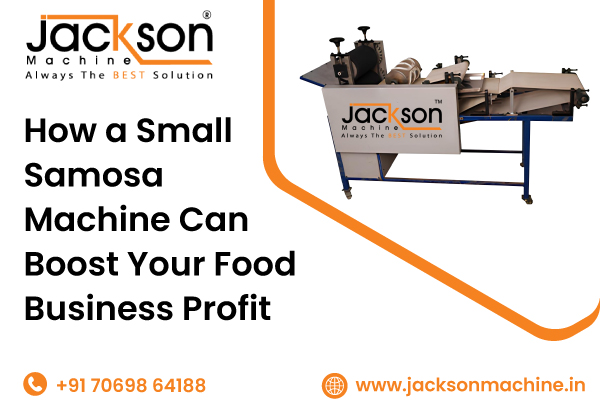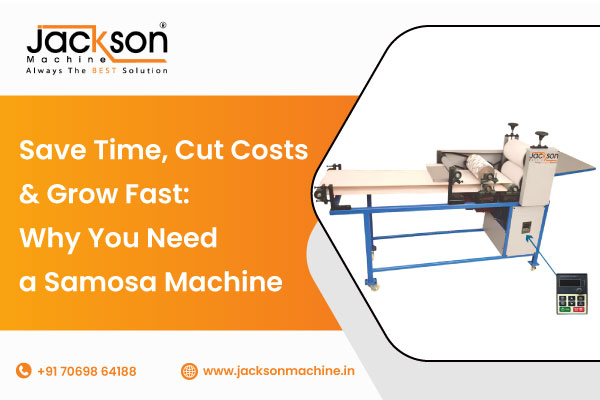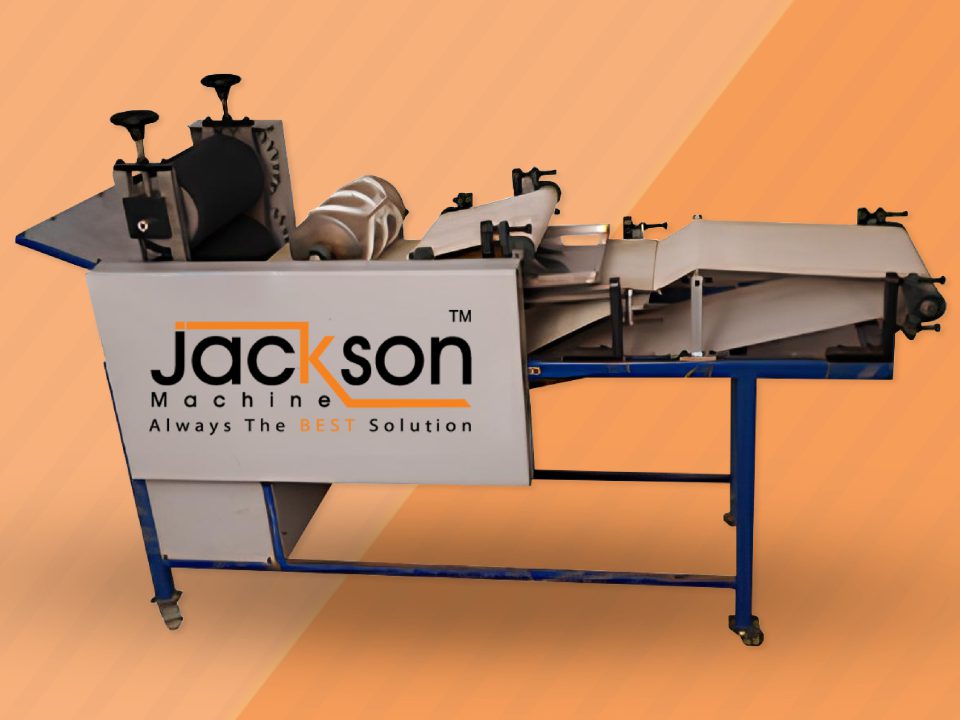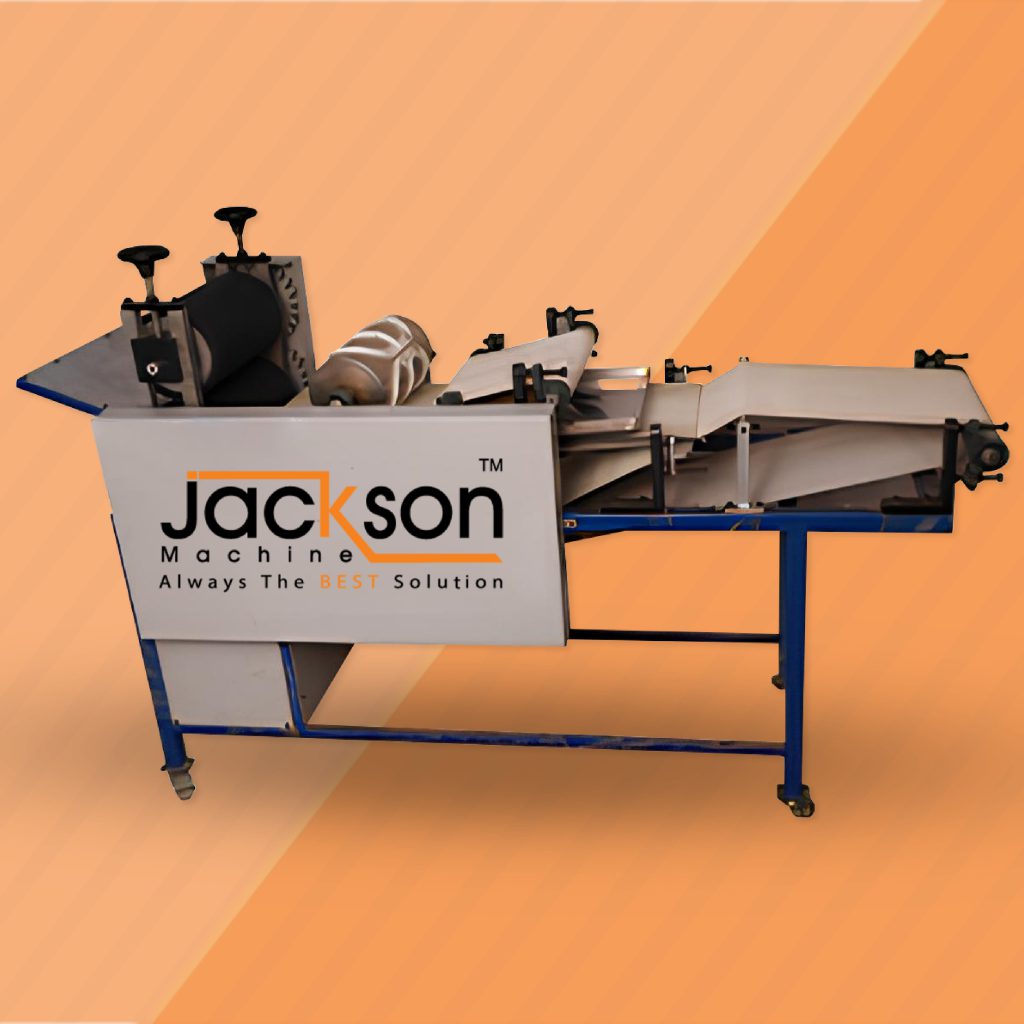
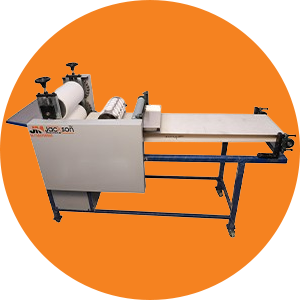
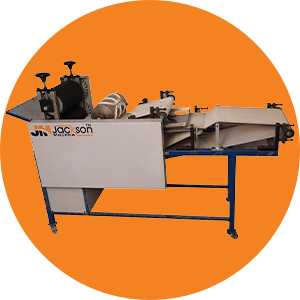
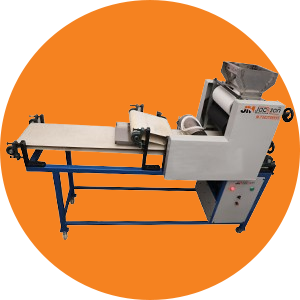
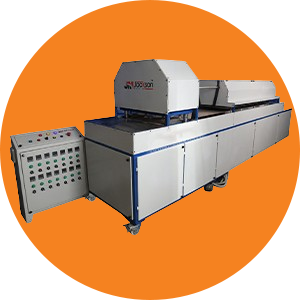
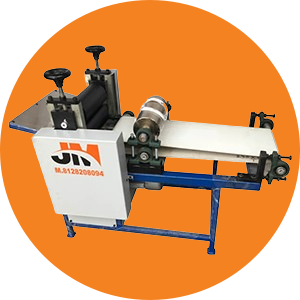
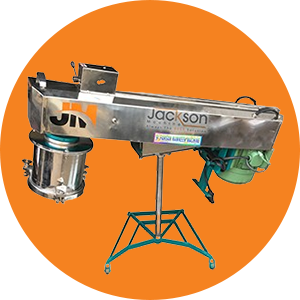
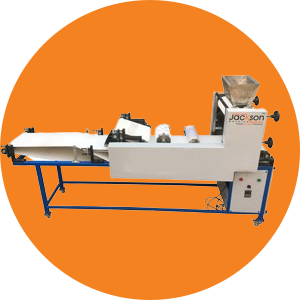
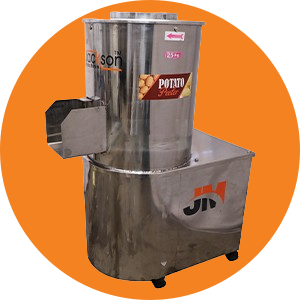
The Indian snack industry is one of the fastest-growing segments in the global food market, with samosa maintaining its position as one of the most consumed and exported savoury products. From local street vendors to large frozen food manufacturers, the demand for uniform, high-volume samosa production continues to rise. Manual production methods struggle to keep pace with today’s commercial requirements for speed, hygiene, and consistency. This is where the Automatic Samosa Making Machine and the advanced Samosa Making Machine have become critical production assets. These machines transform traditional, labour-driven operations into structured, scalable production systems suitable for mass manufacturing. With smart engineering, synchronized forming systems, and hygienic processing design, automation now supports continuous output without compromising product quality. Businesses investing in modern samosa automation also gain control over raw material usage, output stability, and operational costs. As a trusted industrial equipment manufacturer, Jackson Machine provides production-ready machinery that aligns with the evolving demands of industrial kitchens, QSR chains, and food export facilities.
The Evolving Market for Automated Samosa Production
Samosa consumption has moved far beyond local snack counters and now plays a significant role in organized food service, frozen food exports, airline catering, cloud kitchens, and institutional kitchens. As demand scales, traditional hand-folding methods face limitations in output consistency, labour availability, and hygiene monitoring. A commercial Samosa Making Machine directly addresses these structural problems by introducing mechanized forming, synchronized folding, and regulated production flow.
The Automatic Samosa Making Machine has become especially relevant for businesses that supply bulk orders to retail chains and export distributors. These machines support standardized shape, sealed edges, and uniform wrapper thickness, which are critical for freezing, frying, and packaging operations.
Jackson Machine works closely with food manufacturers who seek scalable production without sacrificing the authentic samosa structure required for market acceptance. Automation is no longer a future investment; it has become the foundation of sustainable snack manufacturing.
Benefits of Using Automatic Samosa Making Machines
A modern Samosa Making Machine offers a wide range of commercial benefits that extend across productivity, cost efficiency, and quality management. The first major advantage is production speed. What once required a large team of skilled workers can now be performed in a continuous, automated cycle with stable output.
The Automatic Samosa Making Machine also introduces dimensional accuracy. Every samosa produced follows the same size, fold geometry, and sealing pattern. This uniformity directly strengthens product branding, packaging consistency, and predictable frying behaviour.
Labour dependency reduces significantly after automation is introduced. Businesses can reallocate manpower to value-added tasks such as quality inspection and packaging rather than repetitive forming work. Energy consumption becomes more structured due to motorized cycles replacing prolonged gas-based heating required in manual folding stations.
Material utilization improves because wrapper thickness, filling volume, and sealing precision remain controlled. As a result, wastage caused by wrapper tearing or filling leakage drops sharply. Jackson Machine designs its automated systems with production stability as the central design goal, which directly improves batch reliability.
Key Features of a Commercial Samosa Making Machine
A high-performance Samosa Making Machine is built on precision engineering and food-grade structural integrity. The mechanical forming section shapes the samosa cone with consistent folds and tight sealing at the base and side edges. The feeding system regulates filling volume so that every piece maintains uniform weight.
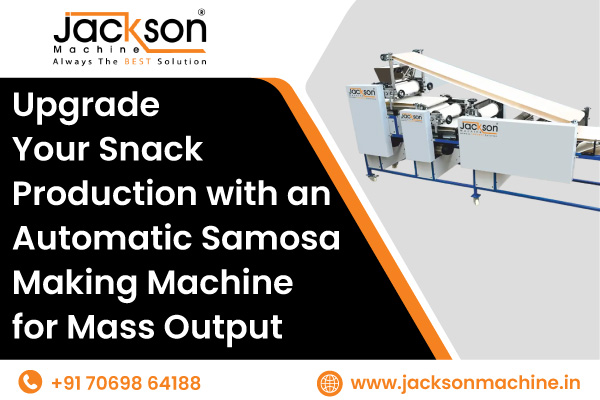
In a fully Automatic Samosa Making Machine, the operation integrates dough sheet feeding, forming, filling, and shaping within a synchronized mechanical flow. Speed adjustment mechanisms allow manufacturers to modify output based on production demand without affecting structural quality.
The chassis is fabricated using stainless steel suitable for food processing environments. This supports ease of cleaning and long-term corrosion resistance. Drive motors are selected for continuous-duty operation so that production remains stable across extended manufacturing shifts.
Jackson Machine incorporates operator-friendly controls and stable machine foundations to reduce vibration during high-speed operation. This structural balance supports accurate shaping even during prolonged production runs.
Importance of Automation in High-Volume Samosa Manufacturing
Automation plays a decisive role in transforming samosa production from a labour-intensive craft into an industrial-grade food process. A professional Samosa Making Machine provides batch-to-batch consistency that manual production cannot replicate at scale. Uniform wrapper thickness directly influences frying behaviour, oil absorption, and shelf life performance.
For frozen food manufacturers, the Automatic Samosa Making Machine delivers geometrical precision necessary for stable stacking, freezing, and packaging. Even slight manual variation can cause breakage during cold storage and transportation.
In institutional kitchens supplying hospitals, schools, and large corporate canteens, automation supports predictable daily production without dependence on variable workforce skills. Cloud kitchens and QSR brands use automated machines to maintain identical product quality across multiple outlets.
Food hygiene has also become a decisive operational factor. Reduced manual handling lowers contamination risk and supports compliance with structured food safety audits. Jackson Machine engineers its production equipment with these regulatory realities in mind.
Machine Types, Working Process, and Industrial Applications
Types of Samosa Making Machines
A Samosa Making Machine is available in different operational formats based on production capacity and automation level. Entry-level operations often adopt semi-automated forming systems where certain feeding actions remain manual. Large food factories, however, rely on a fully Automatic Samosa Making Machine that integrates multiple production stages within one synchronized system.
These automated units are designed for continuous output, making them suitable for frozen food production lines and wholesale snack manufacturing units. Jackson Machine supports both mid-scale and large-scale manufacturers through capacity-aligned machine designs.
Working Process of an Automatic Samosa Making Machine
The operation cycle of a Automatic Samosa Making Machine begins with feeding of pre-prepared dough sheets into the forming section. The machine automatically shapes the sheet into a conical wrapper using calibrated mechanical forming plates. At the same time, the filling system dispenses a measured portion of prepared stuffing into each wrapper.
The forming mechanism then folds and seals the samosa with precise pressure to avoid cracks or gaps. The finished samosa exits onto a collection conveyor or tray system, ready for direct frying or frozen storage. This continuous mechanical flow allows consistent production without cyclic interruptions.
The same core forming principle applies across every modern Samosa Making Machine, with differences primarily in output capacity and automation depth.
Production Capacity and Output Control
Production capacity depends on machine size, feeding mechanism, and forming speed. Industrial-grade units are designed for uninterrupted multi-shift operation. Speed control allows operators to modify output without compromising shape integrity.
A Automatic Samosa Making Machine offers predictable hourly output that allows planners to schedule frying, freezing, and packaging operations with precision. Raw material procurement also becomes structured when daily production volumes remain stable.
Jackson Machine supports clients with machine configurations that match current demand while keeping scope for future expansion without complete line replacement.
Industrial Applications of Samosa Making Machines
The commercial application of a Samosa Making Machine spans several sectors. Frozen food manufacturers use automated forming for export-oriented retail packs. Hotels and banquet kitchens rely on automated production during large-scale events and catering functions.
Street food brands expanding into franchised chains adopt the Automatic Samosa Making Machine to replicate the same product at every outlet. Central kitchens use these machines to supply semi-finished samosas for satellite outlets and cloud kitchens.
Jackson Machine designs its industrial machines to operate reliably across all these segments without performance degradation under continuous demand.
Operational Efficiency and Cost Structure Impact
Adopting an automated Samosa Making Machine restructures the entire cost model of samosa production. Labour costs reduce as machine output replaces repetitive forming tasks. Training requirements also decrease as physical skill dependency drops.
Energy consumption becomes predictable because machine drive motors operate within calibrated load cycles. This allows better monthly energy budgeting compared to fluctuating gas usage in manual operations.
Material wastage drops as wrapper tearing, overfilling, and irregular sealing reduce significantly. These operational improvements collectively enhance profit margins over long-term production cycles.
A Automatic Samosa Making Machine also shortens order processing time for bulk buyers, enabling faster turnaround for institutional and wholesale contracts. Jackson Machine builds its machinery with long service life in mind to support stable financial planning for food manufacturers.
Maintenance and Production Stability
Mechanical reliability is central to sustaining daily production targets. A well-built Samosa Making Machine uses standardized components that simplify periodic maintenance. Lubrication points, blade accessibility, and drive alignment remain structured for routine inspection.
The Automatic Samosa Making Machine operates under continuous mechanical load, so stable motor performance and structural balance are crucial. Jackson Machine emphasizes vibration control and load-distribution during machine fabrication, which directly supports smooth long-term operation.
Routine servicing and hygienic cleaning cycles maintain both performance stability and food safety compliance. Investment in a well-designed machine significantly reduces unplanned downtime during peak production periods.
Why Choose Us
Jackson Machine stands as a committed manufacturing partner for growing snack production businesses that demand consistent performance, dependable engineering, and production-aligned design. Each machine is developed through a deep understanding of Indian food manufacturing conditions, raw material behaviour, and real-world production challenges. Jackson Machine supplies not only equipment but also production-ready solutions that strengthen business stability, product integrity, and output discipline over years of commercial use.
Conclusion
The transition from manual forming to mechanized production represents a defining shift in modern samosa manufacturing. A professional Samosa Making Machine empowers businesses to meet rising market demand with operational control and uniform product quality. The Automatic Samosa Making Machine supports mass output with precise shaping, sealed edges, and stable daily production performance. From frozen food exporters and hotel chains to cloud kitchens and institutional catering units, automation now defines commercial success in the snack industry. With engineering expertise and industry-focused design, Jackson Machine delivers equipment that supports consistent growth, structured manufacturing, and long-term production efficiency.
For advanced samosa production solutions built for mass output, connect with Jackson Machine today. Call +91 63523 14282 or email navneet@jacksonmachine.in.
FAQs
What type of businesses should invest in an Automatic Samosa Making Machine?
Businesses with bulk daily production such as frozen food manufacturers, hotels, institutional kitchens, and export units gain the most operational value from full automation.
How does a Samosa Making Machine improve product consistency?
A Samosa Making Machine maintains uniform wrapper thickness, measured filling volume, and stable folding geometry, which creates identical output in every production cycle.
Can an Automatic Samosa Making Machine support different samosa sizes?
Yes, most models allow forming adjustments that adapt to different samosa dimensions based on production requirements and market demand.
Is automated samosa production suitable for cloud kitchens?
Cloud kitchens benefit from automation by producing consistent semi-finished samosas in advance, which improves service speed and reduces kitchen workload during peak hours.
Why is Jackson Machine a reliable choice for samosa production equipment?
Jackson Machine focuses on production-aligned engineering, durable construction, and practical machine design that supports continuous commercial operations across multiple food service segments.