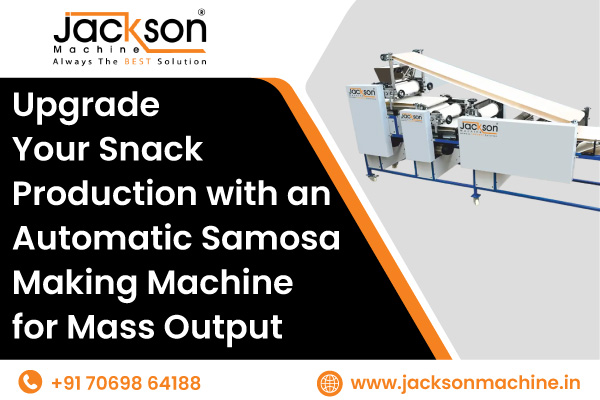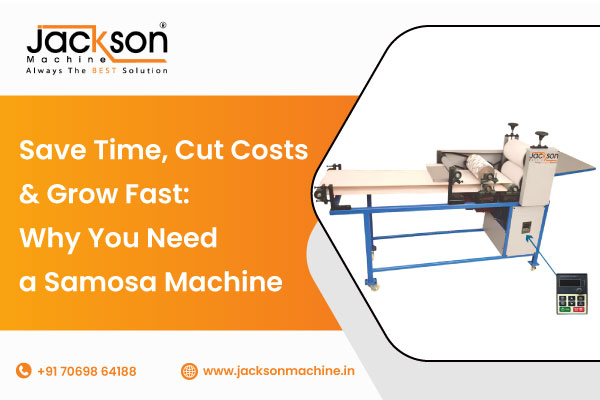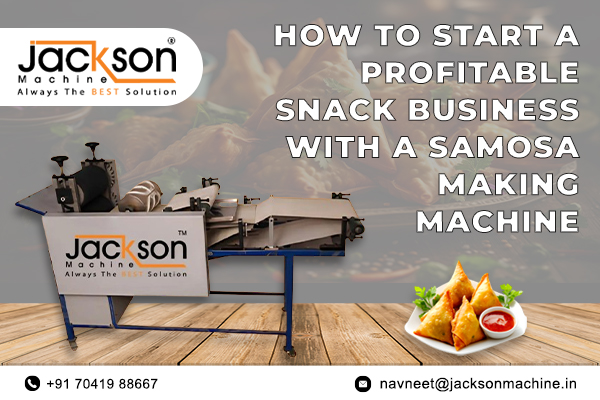
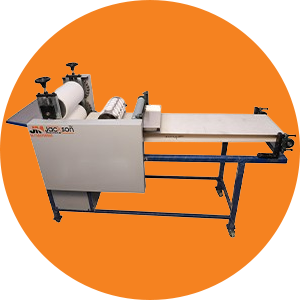
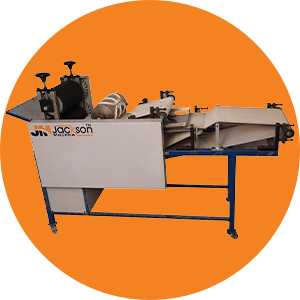
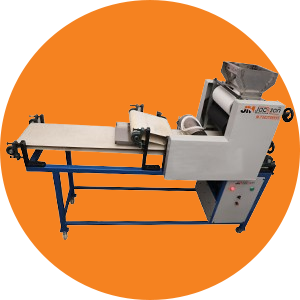
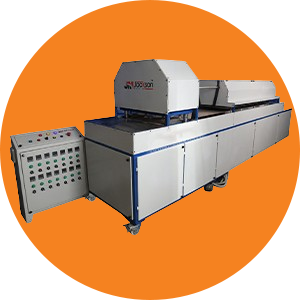
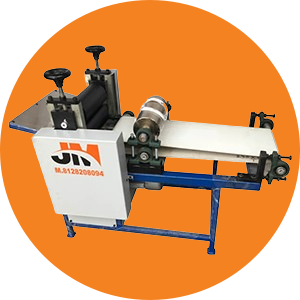
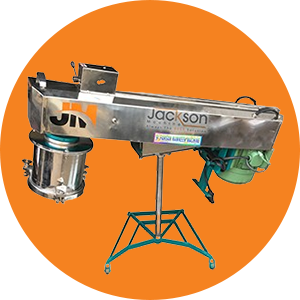
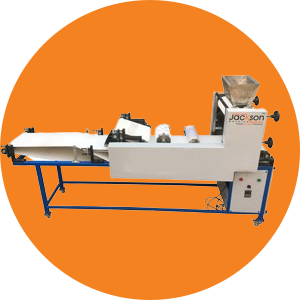
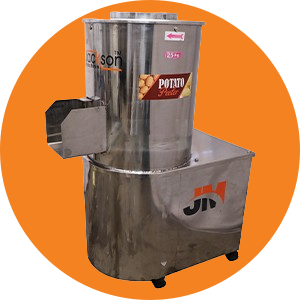
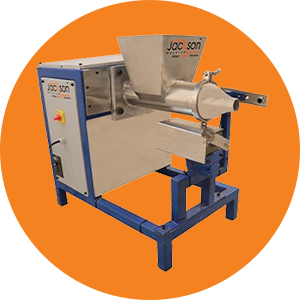
The Indian snack manufacturing industry is undergoing a rapid transformation with the adoption of advanced food processing technology. From small local vendors to large-scale food manufacturers, automation has become the backbone of consistent quality and scalable output. A modern Samosa Making Machine plays a pivotal role in this shift by replacing labor-intensive manual processes with high-speed, precision-driven production. Businesses that invest in a Top Samosa Making Machine gain an edge through improved productivity, hygiene control, and uniform product quality. Today, solutions such as the Samosa Patti Making Machine with Baking System, Samosa Patti Making Machine, and samosa sheet making machine allow manufacturers to standardize the most critical stage of samosa preparation—the outer casing.
With growing demand for regional variants like onion-based samosas, equipment such as the Onion Samosa Patti Machine, Automatic Samosa Making Machine, Semi-Automatic Samosa Patti Machine, and even the Small Samosa Machine offers scalable options for every business size. As a Top Samosa Making Machine Manufacturer in India, Jackson Machine delivers reliable, industry-aligned solutions for modern snack production.
Industry Overview and Market Demand for Automated Samosa Production
The demand for ready-to-eat and quick-service snacks has increased across urban and semi-urban markets. Samosa remains one of the most consumed snacks, not only in India but also in export markets across the Middle East, Europe, and North America. Manual production methods face challenges such as inconsistent size, uneven thickness, and fluctuating output capacity. Automated systems address these critical issues.
A professionally engineered Samosa Making Machine eliminates dependency on large labor teams while supporting continuous production. Manufacturers increasingly prefer a Top Samosa Making Machine that integrates dough sheet formation, cutting, and forming in a synchronized flow. Equipment such as the Samosa Patti Making Machine and samosa sheet making machine now serve as essential infrastructure in food processing units that prioritize quality standardization.
Benefits of Automatic Samosa Making Machines
Automation in samosa production brings measurable business advantages across operations, cost management, and product quality.
A key benefit of using a Samosa Making Machine is the significant increase in production output without proportional growth in labor cost. When supported by systems like the Samosa Patti Making Machine with Baking System, manufacturers also gain an integrated approach to sheet preparation.
A Small Samosa Machine allows startups, cloud kitchens, and small snack brands to enter the market with low operational complexity while maintaining professional-grade output. Medium-sized units benefit from the flexibility of a Semi-Automatic Samosa Patti Machine, which offers partial automation while retaining manual control where required.
Specialized solutions like the Onion Samosa Patti Machine support niche production requirements by managing moisture content and thickness for onion-based fillings. The Automatic Samosa Making Machine creates uniform folding, tight sealing, and consistent shell thickness, which directly reflects in frying performance and shelf stability.
From a business perspective, the use of a samosa sheet making machine stabilizes raw material usage and reduces dough wastage. This directly improves profit margins across batch production cycles.
Core Features of Modern Samosa Making Equipment
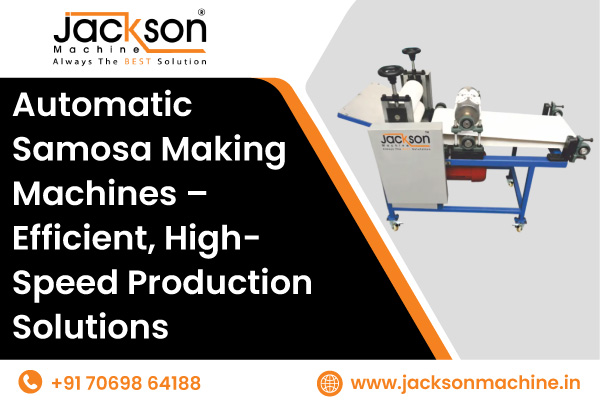
A contemporary Top Samosa Making Machine is built with a combination of mechanical stability, food-grade materials, and precision engineering. The design incorporates adjustable rollers for sheet thickness control, synchronized cutting systems for uniform patti shape, and controlled feeding mechanisms for seamless forming.
The Samosa Patti Making Machine operates with calibrated rollers that convert dough into uniform sheets at regulated thickness levels suitable for different samosa sizes. When combined with a Samosa Patti Making Machine with Baking System, the sheet is partially heat-treated, which improves elasticity and crack resistance during folding.
A reliable Automatic Samosa Making Machine features digital control panels for speed regulation, batch consistency, and motor stability during long operational hours. Equipment layouts are designed for easy cleaning, hygiene compliance, and line integration within existing production setups.
For space-constrained or entry-level setups, the Small Samosa Machine offers compact installation with consistent forming accuracy. The Semi-Automatic Samosa Patti Machine remains favored by businesses that need flexibility for customized sheet dimensions while still achieving standardized production flow.
Importance of Automation in Samosa Manufacturing
The importance of automation in snack production extends far beyond output volume. A modern Samosa Making Machine establishes product uniformity, which is essential for brand identity in competitive markets. Consistent patti thickness generated through a samosa sheet making machine leads to even frying and predictable texture.
The Onion Samosa Patti Machine holds particular importance for high-moisture filling applications where manual sheet preparation often results in tearing or leakage. Automation minimizes these structural inconsistencies.
Using a Samosa Patti Making Machine with Baking System also reduces dependence on sun-drying or air-drying processes, which are vulnerable to climate variability. The baked sheet format supports faster filling, folding, and freezing in industrial setups.
An Automatic Samosa Making Machine aligns with food safety protocols by limiting human contact with dough and sheets. This aspect strongly influences buyer trust, particularly for export-oriented manufacturers.
Types, Working Mechanism, and Applications
Types of Samosa Making Machines
Manufacturers select from multiple machine types based on capacity, floor space, and production targets. A Small Samosa Machine serves low-volume outlets, catering services, and test kitchens. A Semi-Automatic Samosa Patti Machine suits mid-level production units that require manual filling and folding support. A full Automatic Samosa Making Machine is preferred by industrial plants with continuous production demands.
For sheet formation, the Samosa Patti Making Machine and samosa sheet making machine remain core process units. Specialized variants such as the Onion Samosa Patti Machine support targeted product lines.
Working Principle
A standard Samosa Making Machine begins its cycle with dough feeding into precision rollers of the samosa sheet making machine section. The dough is flattened into uniform sheets, which are then passed through controlled cutting systems to form patti shapes. In machines equipped with the Samosa Patti Making Machine with Baking System, these sheets move through a regulated heating chamber to stabilize moisture.
The formed pattis are then transferred to forming modules in an Automatic Samosa Making Machine, where they are shaped into samosa cones. This seamless handover between machines results in consistent geometry and minimal material loss.
Production Capacity and Scalability
A Top Samosa Making Machine supports scalable production by allowing speed adjustments across multiple modules. Entry-level manufacturers often start with a Small Samosa Machine and later integrate a Semi-Automatic Samosa Patti Machine for higher throughput. Large enterprises operate fully integrated lines controlled through centralized panels.
Industry Applications
The application of a Samosa Making Machine extends across frozen food manufacturers, hotel chains, catering companies, food export houses, and centralized kitchens. A Samosa Patti Making Machine is often deployed as a standalone unit in facilities that outsource filling and folding to other plants. The samosa sheet making machine also supports hybrid snack production lines producing spring rolls and similar wrappers.
Why Choose Us
As a reputed Top Samosa Making Machine Manufacturer in India, Jackson Machine combines application-driven design with long-term engineering reliability. Every solution is developed to match real production challenges faced by Indian and global snack manufacturers. Jackson Machine focuses on structural durability, operational stability, and process compatibility, which allows businesses to scale without production bottlenecks. With Jackson Machine, manufacturers gain not just machinery, but a technology partner aligned with quality, productivity, and commercial growth.
Conclusion
The adoption of advanced samosa production technology is no longer limited to large industrial plants. Today, businesses of every scale benefit from investing in a reliable Samosa Making Machine that aligns with modern quality and hygiene standards. Whether the requirement involves a Small Samosa Machine for pilot batches, a Semi-Automatic Samosa Patti Machine for mid-scale production, or a fully integrated Automatic Samosa Making Machine for large factories, the right equipment directly influences product consistency and operational efficiency. Choosing a Top Samosa Making Machine from a trusted Top Samosa Making Machine Manufacturer in India like Jackson Machine helps manufacturers build a future-ready production line with stable output and controlled costs.
For reliable, high-output in automation, contact Jackson Machine today. Call +91 63523 14282 or email navneet@jacksonmachine.in for technical consultation.
FAQs
What are the main advantages of using an Automatic Samosa Making Machine?
An Automatic Samosa Making Machine improves production speed, ensures consistent patti thickness, enhances hygiene, reduces labor dependency, and provides uniform shaping and sealing for better frying performance.
Can small businesses also benefit from samosa-making machines?
Yes. A Small Samosa Machine is ideal for startups, cloud kitchens, and small-scale manufacturers, offering affordable automation with professional-quality output.
What is the purpose of a Samosa Patti Making Machine with Baking System?
This system partially heat-treats the dough sheet, improving elasticity, preventing cracks during folding, and enhancing overall product durability for industrial production.
How does automation improve samosa quality and consistency?
Automation ensures uniform sheet thickness, accurate cutting, consistent folding, and reduced human handling, leading to predictable texture, better frying results, and improved shelf-life stability.
Which industries commonly use Samosa Making Machines?
Frozen food manufacturers, hotel chains, catering companies, central kitchens, food exporters, and large snack brands widely use samosa-making machines for high-volume, standardized production.